
Why limited editions still work (when so many marketing trends don't)

Marketing has always had a habit of chasing the next big thing.
Every year brings another platform to master, another algorithm update to decipher or another tactic that's supposed to transform the way businesses connect with customers. Some of those changes genuinely reshape marketing. Others fade into the background almost as quickly as they arrived, remembered mainly as another passing trend.

Limited editions, however, seem remarkably resistant to that cycle.
Long before social media existed, brands were releasing seasonal products, commemorative packaging and collector's editions designed to celebrate a particular moment in time. Decades later, they're still doing exactly the same thing. That's a good indication that their success has less to do with clever marketing tactics and far more to do with something fundamental about the way people make purchasing decisions.
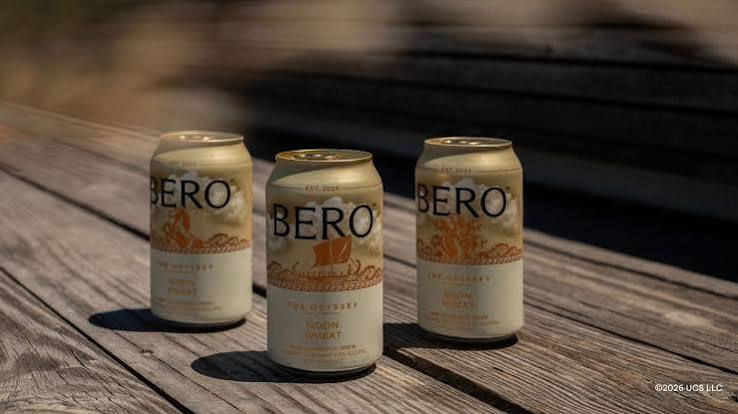
Tom Holland's latest collaboration between his non-alcoholic beer brand BERO and Christopher Nolan's The Odyssey offers a good example.
On the surface, it's a limited-edition six-pack with bespoke artwork inspired by one of this summer's biggest films. Look a little closer, though, and it becomes a reminder that the strongest limited editions rarely succeed because they're difficult to get hold of. They succeed because they give people the opportunity to own a small piece of a moment they'd like to remember.
The best limited editions tell a story
It's tempting to think the appeal of limited editions begins and ends with scarcity. After

all, psychologists have long recognised that people naturally place greater value on opportunities they believe are finite.
Dr Robert Cialdini identified scarcity as one of the six core principles of persuasion, arguing that limited availability often increases perceived value because we instinctively fear missing out. It's an idea that's influenced marketing for decades and continues to shape everything from product launches to ticket sales today.
But scarcity only explains part of the picture.
If simply producing fewer items guaranteed success, every "limited edition" would become an instant hit. In reality, consumers have become increasingly sceptical of artificial urgency. Countdown timers that reset every week or products that seem to remain "exclusive" indefinitely rarely inspire much excitement because they feel manufactured rather than meaningful.
The examples that endure usually have something else in common. They represent a particular place, event or cultural moment that can't easily be recreated.
Think about the festival wristband you never quite got round to throwing away, a football shirt from a memorable season or a concert poster that's survived several house moves. Their value doesn't come from what they're made of. It comes from what they represent.
The same principle often sits behind the most successful limited-edition products.
Why BERO's collaboration feels authentic
BERO's partnership with The Odyssey works because it understands that distinction.

Rather than introducing a completely new beer, the brand released a limited-edition six-pack featuring three collectable can designs inspired by Christopher Nolan's adaptation of Homer's epic, including illustrations of the Trojan Horse, the Hydra and Odysseus' ship.
The beer itself remains familiar, but the packaging transforms the product into something that sits somewhere between a drink and a piece of film memorabilia. (Further reading: American Craft Beer's coverage of the collaboration and BERO's official website.)
That idea becomes even stronger when you consider the wider context.
Tom Holland isn't simply the celebrity face of the campaign; he's one of BERO's founders and also stars in The Odyssey. The collaboration therefore feels like a natural extension of the brand rather than a licensing exercise designed purely to generate headlines. Customers are increasingly adept at spotting partnerships that exist because two logos look good together.
This one succeeds because there's a genuine story connecting the founder, the product and the film.
It's a subtle difference, but an important one. Authenticity has become one of the most valuable assets a collaboration can have, particularly at a time when audiences are becoming more selective about the marketing they're willing to engage with.
The lesson isn't scarcity – it's significance
It's easy to assume campaigns like this are only relevant to global brands with celebrity founders and sizeable marketing budgets.
In reality, the principle behind them is remarkably accessible.
The businesses that use limited editions most effectively aren't simply trying to create urgency. They're creating significance.
A neighbourhood bakery might release a special range celebrating the town's annual festival. An independent coffee roaster could produce a blend to mark its tenth anniversary, while a local florist might collaborate with another small business to create a collection inspired by the changing seasons. None of those ideas relies on celebrity endorsements or blockbuster budgets, yet each gives customers a reason to associate the product with a particular experience.
That's often where the real value lies.
People rarely remember another percentage discount or a short-term promotion. They do remember the product they bought during a special event, the seasonal collection they looked forward to every year or the collaboration that genuinely reflected the character of the businesses behind it.
In other words, they're remembering the story rather than the sales tactic.
What we think about limited editions
One of the reasons limited editions have outlasted so many marketing trends is that they're built on something much more enduring than urgency. They tap into our instinct to collect, celebrate milestones and hold on to objects that remind us of experiences we'd rather not forget.
BERO's collaboration with The Odyssey demonstrates that particularly well. While the collectable cans may encourage people to buy the product today, it's the connection to a wider story that gives them lasting appeal. The beer becomes more than a drink; it becomes a reminder of a film, a summer and a moment in popular culture.
For businesses of any size, that's perhaps the more valuable lesson.
Marketing will continue to evolve, and there will always be another platform, trend or tactic competing for attention. Yet the campaigns that tend to leave the biggest impression are often those that understand something much simpler: people don't just buy products. They buy stories, memories and moments that feel worth holding on to.


Comments