
What's Happened in Marketing in June 2026? Major News, Trends & Campaigns

Updated: Jul 13
The summer marketing campaigns are officially in action. Whether they’re activated by the FIFA World Cup, PRIDE month, or huge events like the Cannes Lions International Festival of Creativity.
It’s a busy month.
In the background, organic and paid search strategy continues to reshape in response to algorithm changes across big social platforms like LinkedIn, as well as the ongoing turbulence caused by LMMs.
1. Cannes Lions doubled down on creators over celebrities
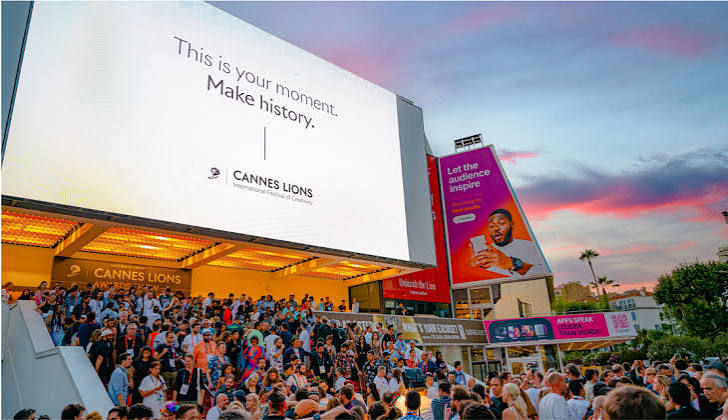
Some people call it the “Oscars of advertising”, the Cannes Lions International Festival of Creativity is a huge event within advertising, marketing, and the creative comms industry. Its huge prominence attracts some of the brightest minds around, which means it's often a gateway to interesting insights - pencils and paper at the ready.
This year, some of the more interesting takeaways were:
Creators are now central to marketing rather than an add-on
Many brands announced larger creator budgets
Influencer-led campaigns dominated conversations
AI should augment creativity rather than replace it
Creaters are definitely the flavour of this year’s meet-up, but there’s a caveat. Not all creators are equally useful for your brand. Make sure relevancy is considered - people can see through redundant partnerships quite easily!
2. The World Cup goes heavy on collabs

The 2026 FIFA World Cup kicked off on June 11, co-hosted across the US, Canada and Mexico for the first time, with 48 teams instead of the usual 32. Naturally, marketing budgets have followed the fan attention: official partners, including:
Adidas
Coca-Cola
Hyundai-Kia
Visa
Qatar Airways
Aramco
Lenovo
All these brands are in the mix, and reportedly committing somewhere in the region of $150-200 million per four-year cycle for top-tier rights.
But the more interesting story is happening outside the official sponsor tier.
Because FIFA tightly controls who gets to activate around the tournament, brands without sponsorship rights have had to get creative - and it's paying off.
When Levi's naming rights on the Santa Clara stadium had to be covered up for the games, the brand leaned into it rather than fighting it, turning a restriction into what's reportedly the most-shared post in the company's history. Gillette did something similar in Boston, disguising its blocked-out signage as a swipe of shaving foam.
Then there's LEGO, which isn't an official sponsor at all but ended up generating a huge share of the most-engaging brand content of the entire tournament build-up through a multi-wave, creator-and-fan-led campaign. And in a similar vein, a single TikTok from Spanish player Lamine Yamal - playfully mispronouncing his teammates' names - reportedly out-performed every official sponsor, athlete, and even FIFA's own channels.
The message for marketers: an official partnership badge no longer guarantees you the biggest share of voice. Wit, timing, and a willingness to let fans and creators run with an idea are increasingly worth more than the badge itself.
3. PRIDE marketing focuses on authenticity

This year's Pride campaigns leaned hard into storytelling, community history and long-term commitment rather than one-month rainbow branding:
Grindr and Madonna - Grindr's biggest commercial activation to date, timed to the release of Madonna's new album. The partnership included an in-app takeover and a surprise pop-up concert in Times Square, livestreamed globally to app users.
Diesel and Tinder - "For Successful Loving," a 17-piece capsule collection fronted by drag star and designer Gigi Goode, built around documentary-style interviews with LGBTQIA+ couples about modern dating. The two brands also made a combined $200,000 donation to Outright International.
Levi's Pride collection - "Together, We Ride" drew on the overlooked history of queer motorcycle clubs, complete with archival references and a $100,000 donation to Outright International. Notably, it launched at a moment when several other companies were visibly scaling back their Pride activity.
The common thread across all three: specificity and follow-through beat generic rainbow merchandise. Grounding a campaign in real community history or backing it with a genuine financial commitment gives audiences something harder to dismiss as performative.
4. Ffern uses Arthurian legend to champion their fragrances

Not every brand needs a nine-figure sponsorship deal to make noise. UK niche perfume house Ffern released just one new scent this month - "Green Knight," its Summer '26 fragrance - and turned it into a full storytelling moment built entirely around Arthurian legend, referencing the Green Chapel from medieval myth.
The whole campaign leans on Ffern's signature aesthetic: retro, saturated imagery, medieval-style tokens and illustrations that look pulled from an old apothecary. There's no celebrity face and no paid media blitz.
Instead, the brand relies on scarcity (each fragrance is barrel-aged, made in small batches and released only at the turn of the season) and a strong narrative world to keep its members' waiting list full. Watch the video below.
It's a good reminder that distinctive brand storytelling and genuine scarcity are still some of the most reliable levers in marketing - budget optional.
5. Suncorp – Haven wins Best Campaign

The standout campaign of Cannes Lions this year came from an unlikely category: home insurance. Australian insurer Suncorp, working with agency Leo Australia, walked away with the festival's top prize, the Titanium Grand Prix, plus wins across Creative Data, Direct and Brand Experience & Activation.
The insight behind it: 81% of Australians have lived through extreme weather, but only 17% have any kind of plan to protect their home. So Suncorp built "Haven" - a free digital tool, open to anyone, not just Suncorp customers, that pulls from a dozen live data sets to generate a personalised climate-risk assessment for any Australian address, right down to the street level.
Enter your address, and the tool essentially gives your home a voice to describe its own bushfire, flood, cyclone or storm risk, along with practical steps to reduce it.
It's part of a longer five-year strategy shift for the brand, moving from "recovery" messaging to "resilience," and the results have been hard to argue with: over 320,000 visits (well above target), and Suncorp's home policy growth reportedly up 75% year over year.
The takeaway for marketers: the most awarded campaign of the year wasn't really an ad campaign at all. It was a genuinely useful product, built on the brand's own data, that happened to double as the most powerful piece of marketing the company has produced.
6. Discovery platforms continued to shift

Behind the scenes, the infrastructure marketers rely on for organic reach kept moving. LinkedIn's feed is now run by a large, unified AI ranking model rolled out earlier this year, which has meaningfully changed what gets surfaced. Hashtags and keyword-matching carry a lot less weight than they used to - the system now interprets meaning and context instead.
Comments and saves (what LinkedIn is reportedly calling a "Depth Score") outweigh raw like counts, and posts that lean on obvious engagement-bait tactics are actively pushed down rather than rewarded. On the flip side, genuinely useful evergreen posts can resurface in feeds weeks after publishing if they're still relevant to someone's interests.
It's part of a broader pattern playing out across discovery platforms generally:
Google's search results are increasingly answered directly inside AI Overviews rather than through a click-through, and being well-optimised for traditional keyword SEO doesn't guarantee visibility inside AI-generated answers either.
Across the board, the platforms marketers depend on for organic reach are quietly shifting away from surface-level optimisation tactics and toward genuine relevance and depth.
For marketers, the practical implication is the same wherever you look: chasing algorithm hacks is becoming a shorter and shorter-term game. Investing in content and campaigns with real substance is turning out to be the more durable strategy.


Comments